What Is Temperature Stepping and Why Should You Try It?

Fordee
March 18, 2026
The Technique That Changes Everything
Most vaporizer users pick a temperature, pack a bowl, and run the whole session at that single setting. It works. But it's leaving a lot on the table.
Temperature stepping is the practice of starting your session at a low temperature and gradually increasing it in stages throughout the bowl. It's simple, it requires no extra equipment, and once you try it, it's hard to go back to static temperatures.
Here's why: dry herb contains dozens of active compounds, each with a different boiling point. When you vape at a single temperature, you're extracting whatever compounds activate at that point, and either missing the ones above your setting or burning through the delicate ones below it too quickly. Temperature stepping lets you methodically work through the full spectrum, tasting and feeling each layer as you go.
Why It Works
Think of your packed bowl as a layered experience waiting to come out.
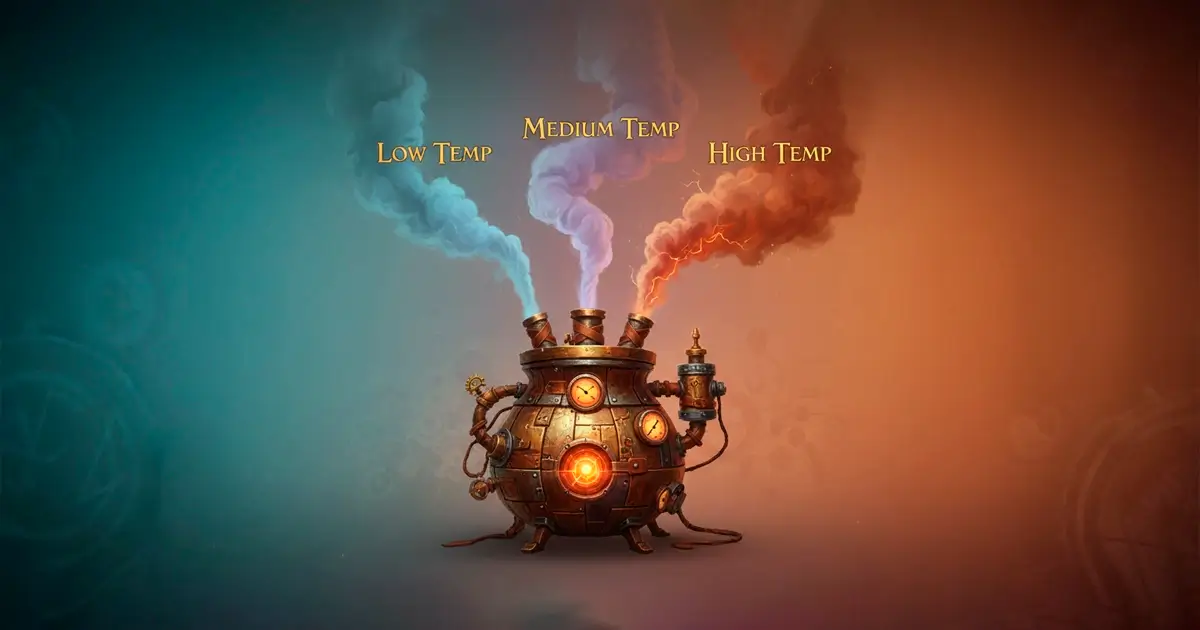
At lower temperatures (320-350F), the lightest compounds vaporize first, primarily terpenes, the molecules responsible for flavor and aroma. These are fragile. They're the first to go when you heat up, and they're the first to get destroyed if you start too high. When you begin a session at 340F, you get pure, unadulterated flavor that you'll never taste at 400F.
As you step up into the mid-range (360-390F), heavier compounds begin to release. The flavor shifts from bright and floral to warmer and more herbal. Effects become more noticeable. The vapor gets thicker. You're still tasting terpenes, but they're mixing with the fuller-bodied compounds that define the mid-range experience.
At higher temperatures (400-430F), you're extracting the last remaining compounds, the heaviest molecules that require significant heat to vaporize. The flavor becomes toasty and robust. Effects are at their strongest. You're squeezing every last bit of value from the bowl.
By stepping through these ranges sequentially, you experience all three phases in a single session instead of choosing just one. You get the full flavor up front, the balanced middle, and the heavy finish. And because you're extracting lighter compounds before moving to heavier ones, each temperature step adds something new rather than re-extracting what's already gone.
A Simple 3-Step Protocol
If you've never tried temperature stepping, start here. This is a straightforward three-stage approach that works with virtually any vaporizer that has adjustable temperature control.
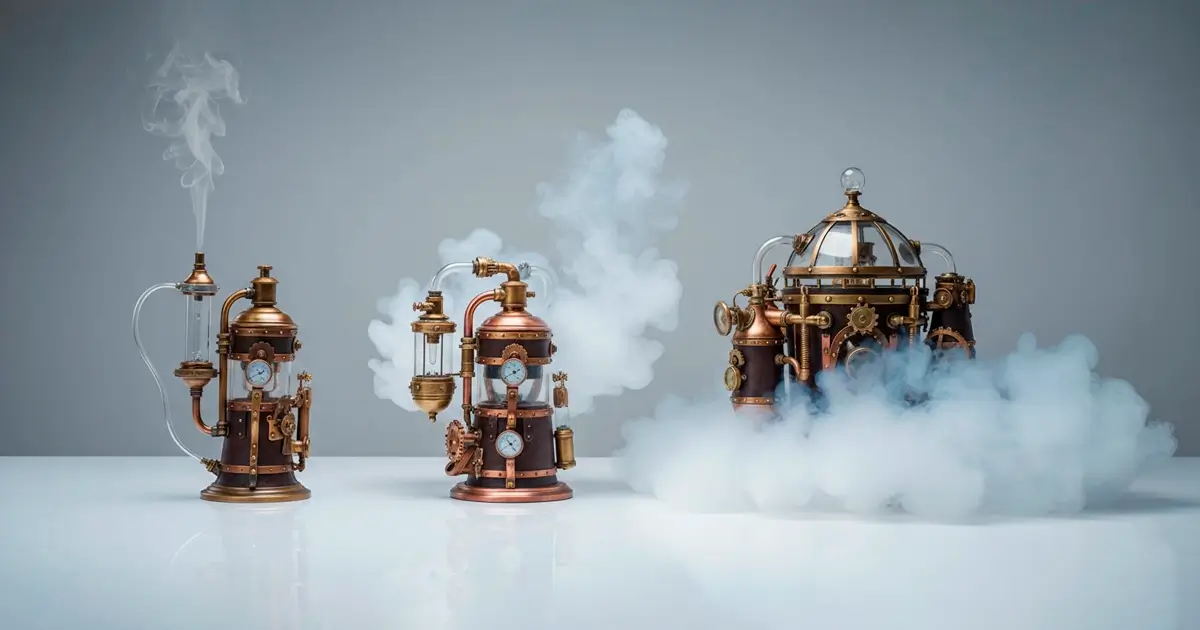
Step 1: Flavor Phase (340-355F)
Pack your bowl normally. Set your device to 340-355F and let it heat up fully. Take slow, gentle draws. The vapor will be thin and wispy. That's normal. Focus on the flavor. You'll taste nuances you've never noticed before: citrus, pine, earth, sweetness, spice. This is your herb's terpene profile, presented cleanly.
Stay at this temperature for 3-5 draws or about 2-3 minutes. When the flavor starts to diminish (you'll notice the draws taste less vibrant), it's time to step up.
What to notice: The flavor intensity and character. Each strain has a distinct terpene profile that's most apparent at this stage.
Step 2: Balance Phase (370-385F)
Increase your temperature by 20-30 degrees. At this range, you'll immediately notice thicker vapor and stronger effects. The flavor is still present but transforms. Less bright, more warm and rounded. This is the phase where most of the session's effects build.
Stay here for 3-5 draws. The vapor should be visible and satisfying. When the draws start to feel thinner or the flavor flattens, move to the final step.
What to notice: How the effects shift compared to Step 1. The mid-range typically produces the most well-rounded experience.
Step 3: Extraction Phase (400-420F)
Step up to 400-420F for the final stage. The vapor gets noticeably thicker and the flavor becomes toasty, some describe it as popcorn-like or nutty. This phase extracts the remaining compounds and ensures you're getting full value from the bowl.
Draw until the vapor production tapers off significantly or the flavor becomes unpleasant (papery or acrid). At that point, your bowl is spent. You've extracted everything there is to get.
What to notice: The density of the vapor and how the effects intensify. This final stage is also a good indicator of how thoroughly you extracted in the earlier phases.
A 4-Step Protocol for Advanced Users
Once you're comfortable with the basic approach, you can refine it with more granular steps:
| Step | Temperature | Draws | Focus | |------|------------|-------|-------| | 1 | 335-345F | 3-4 | Pure terpene flavor | | 2 | 360-370F | 3-4 | Flavor + light effects | | 3 | 385-395F | 3-4 | Full effects, warm flavor | | 4 | 410-425F | 3-5 | Maximum extraction |
The 4-step approach stretches the session longer and gives you even more distinct phases to experience. It's especially rewarding with high-quality herb that has a complex terpene profile.
Benefits of Temperature Stepping
Better Flavor
This is the most immediate benefit. Starting low preserves terpenes that would be destroyed instantly at higher temperatures. If you've only ever vaped at 380F+, you've never actually tasted what your herb's full flavor profile is like. The difference is striking.
Longer Sessions
Temperature stepping naturally extends your session because you're not blasting through all available compounds at once. The same bowl that lasts 5 minutes at a static 390F might last 12-15 minutes when stepped from 340F to 420F. You get more time and more variety from the same amount of material.
More Efficient Extraction
By working through the temperature range methodically, you extract more total compound content from each bowl than you would at any single static temperature. Low temps miss the heavy stuff. High temps destroy the light stuff. Stepping gets everything.
Greater Control Over Effects
Different temperature ranges produce different effects. The low range tends toward clear-headed and uplifting. The high range tends toward heavy and sedating. By stepping through, you experience a progression, starting light and building toward heavy, rather than a single static state. Some users adjust their protocol based on the time of day, stopping at Step 2 for daytime sessions and completing all steps in the evening.

“Temperature stepping is one of those techniques where the first time you try it properly, you wonder why you ever did it any other way.”
Tips for Dialing In Your Steps
Wait for the vapor to thin before stepping up. The transition point between steps isn't time-based. It's based on extraction. When your draws produce noticeably less vapor or the flavor drops off, that temperature range has given you what it can. Time to step up.
Don't rush the low range. The temptation is to blast through Step 1 quickly because the vapor is thin. Resist it. Take slow, deliberate draws and appreciate the flavor. This phase only lasts a few minutes, and it's the only time you'll taste those light terpenes.
Adjust step sizes to your preference. Some people prefer large jumps (30-40 degrees per step) for more distinct phases. Others prefer small increments (10-15 degrees) for a smoother progression. Experiment to find what feels right.
Your device matters. Convection vaporizers tend to handle stepping well because they heat herb evenly. Conduction devices also work but may extract unevenly. The herb touching hot walls gets extracted faster than the center. Stir mid-session if your device allows it.
Pack slightly tighter for stepping. A firmer pack (not compressed, just snug) provides more consistent extraction across a longer, multi-phase session. Loose packs can exhaust quickly before you reach the upper steps.
Track Your Protocol
Temperature stepping becomes most powerful when you refine it over time. What works perfectly for one strain or device might need adjustment for another. The key is tracking what you do and how it goes.
VapeHeatLab's Lab Notes feature was designed with exactly this kind of experimentation in mind. Log your starting temperature, step intervals, the device you used, and how the session felt. Over multiple sessions, you'll see patterns. Maybe your Mighty+ is best with 345/375/410 while your desktop prefers 340/370/395/420. Maybe certain strains taste best with a longer first step.
You can also share your stepping protocol as a heat profile in VapeHeatLab. Other users with the same device can try your exact approach and rate it, and you can browse their stepping patterns for inspiration. The community aspect turns individual experimentation into collective knowledge. The best stepping protocols for each device rise to the top.
Start Simple, Refine Over Time
Temperature stepping doesn't need to be complicated. Start with three steps, pay attention to what you taste and feel at each stage, and adjust from there. The technique works with any temperature-controlled vaporizer, any herb, and any experience level.
The fundamental idea is simple: your herb has more to offer than any single temperature can reveal. Stepping through the range gets all of it, one layer at a time.