
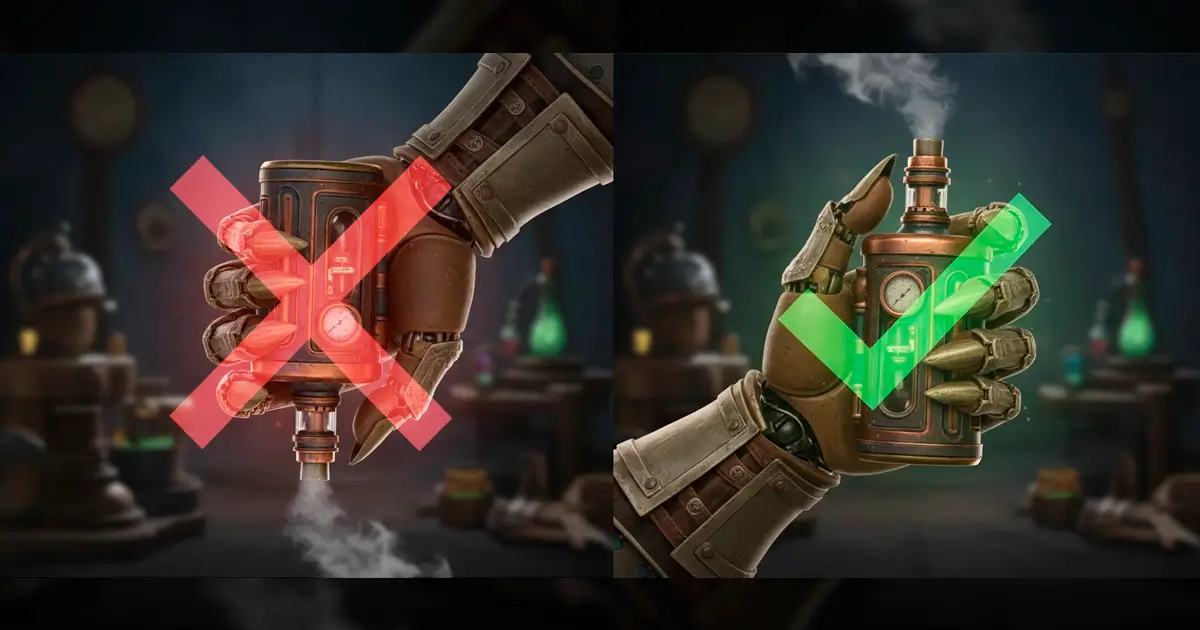
10 Common Vaporizer Mistakes Beginners Make (and How to Fix Them)

Fordee
March 18, 2026
Everyone Makes These Mistakes
Vaporizers aren't complicated, but they're not as forgiving as people expect. Most beginners make the same handful of mistakes that silently destroy their vapor quality, waste material, and leave them thinking their device is the problem.
It usually isn't the device. It's technique.
Here are the 10 most common mistakes new vapers make, why each one matters, and exactly how to fix it.
1. Grinding Too Fine (or Not at All)
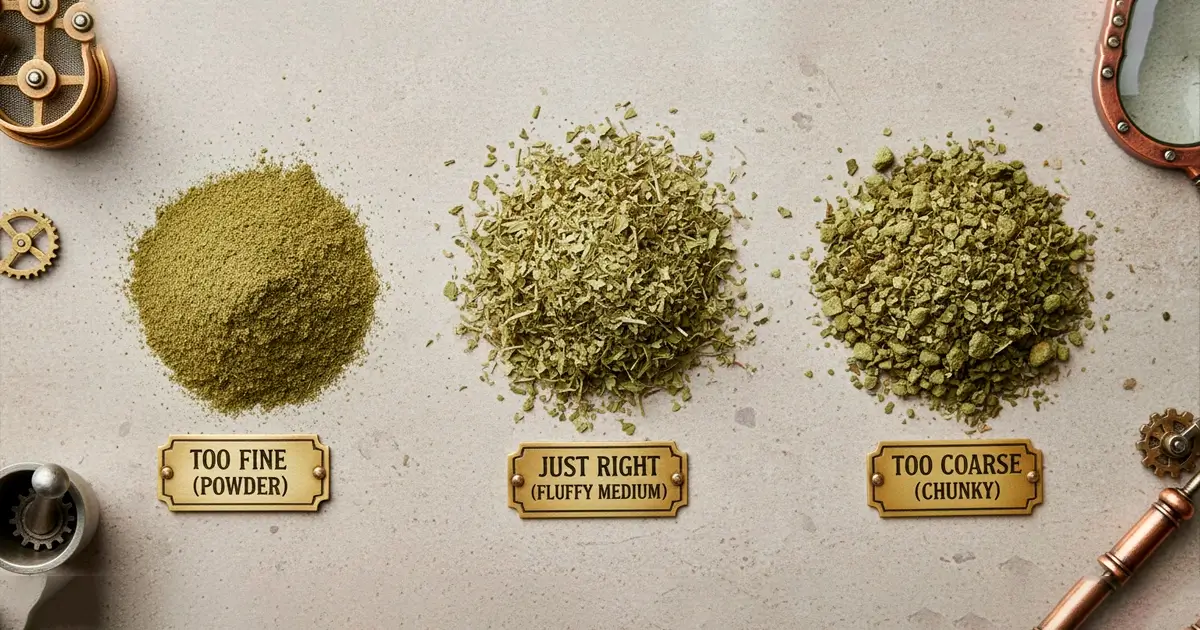
The mistake: Using a fine powder grind or, worse, tearing material apart with your fingers and dropping chunks into the chamber.
Why it matters: Grind consistency is one of the biggest factors in vapor quality. Too fine and the material compacts into a dense mass that restricts airflow. Too coarse and hot air or heat can't reach the center of the chunks, leaving material unextracted.
The fix: Use a medium grind for most devices. You want the consistency of coarse sea salt, not powdered sugar. For conduction devices, a medium-fine grind works since direct contact does the work. For convection devices, a slightly coarser grind lets air flow through the pack. A decent grinder with consistent teeth makes a real difference.
2. Packing the Chamber Too Tight
The mistake: Cramming as much material as possible into the chamber and pressing it down hard, thinking more material means more vapor.
Why it matters: Airflow is everything in vaporization. A tightly packed chamber restricts air from passing through the material, which means less vapor, more draw resistance, and uneven extraction. You'll fight the device on every draw and end up with half your material still green at the end.
The fix: Pack gently. For convection devices, a loose pack with light settling is ideal. For conduction devices, you can pack slightly firmer since the walls do the heating, but never compress hard. The material should sit in the chamber, not be forced into it. If you're having to push down with real pressure, you've packed too much.
3. Using the Wrong Temperature
The mistake: Cranking the temperature to maximum because "more heat means more vapor" or staying at the lowest setting because someone said low temps are better.
Why it matters: Temperature controls what compounds are released and at what rate. Too low and you'll get wispy, unsatisfying vapor. Too high and you get harsh, hot vapor that tastes burnt and might be approaching combustion territory. The sweet spot depends on your device, your material, and what kind of session you want.
The fix: Start in the 350-370F range for flavorful, lighter sessions. Move to 370-400F for balanced vapor production. Go above 400F only when you want maximum extraction and don't mind sacrificing some flavor. Temperature stepping, starting low and increasing through the session, is an excellent technique that gives you the best of both worlds.
“Not sure where to start with your specific device? VapeHeatLab's community heat profiles show you exactly what temps real users recommend, rated by the community so the best settings rise to the top.”
4. Not Preheating the Device
The mistake: Loading the chamber, turning on the device, and immediately drawing as soon as the temperature indicator shows it's ready.
Why it matters: Most devices signal "ready" when the heater reaches temperature, but the chamber walls and airpath may not be fully heated yet. Drawing immediately often gives you a thin, underwhelming first hit because the system hasn't reached thermal equilibrium.
The fix: After your device signals it's reached temperature, wait an extra 10-20 seconds before your first draw. This lets the entire system stabilize. Some users do a "warm-up draw," a slow, gentle pull without fully inhaling, to prime the airpath. The difference in your first real draw will be noticeable.
5. Never Cleaning the Device
The mistake: Using the vaporizer for weeks or months without cleaning the chamber, screen, or airpath.
Why it matters: Residue builds up fast. A dirty screen restricts airflow. Residue in the chamber affects flavor, making everything taste stale and burnt regardless of your material quality. Clogged airpaths increase draw resistance until the device feels like breathing through a straw. In extreme cases, buildup can affect heating performance.
The fix: Quick-clean after every few sessions: brush out the chamber while it's still warm, wipe the mouthpiece. Do a deeper clean weekly with isopropyl alcohol (90%+ concentration) on screens and non-electronic parts. Let everything dry completely before reassembling. A clean device tastes like a new device.
6. Drawing Too Fast and Too Hard
The mistake: Hitting the vaporizer like a cigarette, short, sharp, forceful pulls.
Why it matters: Vaporizers aren't combustion devices. A fast, hard draw pulls cool air through the material faster than the heater can compensate, which drops the effective temperature and produces thin vapor. This is especially damaging with convection devices, where draw speed directly controls how much heat reaches the material.
The fix: Draw slowly and steadily for 10-15 seconds. Think of sipping through a straw, not sucking through one. The slower you draw, the more time the air has to absorb heat and extract from the material. Once you get the feel for your device's ideal draw speed, vapor production improves dramatically.
7. Not Stirring Mid-Session
The mistake: Packing the chamber, running the session, and emptying it out without ever disturbing the material during the session.
Why it matters: This mostly applies to conduction devices, where the material touching the hot walls extracts faster than material in the center. Without stirring, you end up with dark, spent material on the outside and pale, unextracted material in the middle. You're leaving good herb behind.
The fix: For conduction devices, stir or shake the chamber once or twice during your session. Some users do it when they notice vapor production dropping. A stir often brings it back for several more good draws. For convection devices, stirring matters less since hot air reaches the full pack, but it can still help with longer sessions.
8. Ignoring Battery Health
The mistake: Running the battery down to zero every session, charging overnight, or using the vaporizer while it's plugged in and charging (if it even allows this).
Why it matters: Lithium-ion batteries degrade fastest when they're kept at 0% or 100% for extended periods. A degraded battery can't sustain the power output needed to maintain temperature, leading to weak vapor production and temperature drops mid-draw. Inconsistent power means inconsistent sessions.
The fix: Charge before the battery drops below 20%. Unplug once it's full rather than leaving it on the charger overnight. If you won't use the device for a while, store it at around 50% charge. For devices with removable batteries, invest in a quality external charger. They're gentler on cells than most built-in charging circuits.
9. Risking Combustion Without Realizing It
The mistake: Setting the device to its maximum temperature, using a butane-powered device without temperature awareness, or packing material against a directly exposed heater.
Why it matters: Combustion defeats the entire purpose of vaporizing. Once material combusts, you're inhaling smoke, not vapor, along with all the byproducts you were trying to avoid. Some devices have maximum temperatures that sit dangerously close to combustion thresholds, and user error can push you over.
The fix: Know your device's maximum temperature and the combustion threshold for dry herb (roughly 450-465F depending on conditions). Stay below 430F as a general safety margin. With butane devices like Dynavaps, respect the click and don't heat past it. If your material comes out black and ashy instead of dark brown, you've combusted.
10. Not Tracking What Works
The mistake: Finding a great session and having no idea what you did differently. Changing multiple variables at once and not knowing which one mattered. Making the same mistakes session after session because there's no feedback loop.
Why it matters: Vaporizing has several variables: temperature, grind, pack density, draw speed, material type, device, humidity. When things go right (or wrong), knowing which variable made the difference is the key to consistency. Without tracking, every session is a fresh experiment with no accumulated knowledge.
The fix: Start logging your sessions. At minimum, note your device, temperature, material, and a quick rating. Over time, patterns emerge that are impossible to spot from memory alone. You'll discover that certain materials perform better at certain temperatures, that your preferred grind varies by device, or that humidity makes more difference than you thought.
VapeHeatLab's Lab Notes feature is built specifically for this. It includes fields for temperature, strain, mood, intensity, effects, and ratings, so you build a personal database of what works over time instead of relying on guesswork.
The Compound Effect
Here's what most beginners miss: these mistakes stack. A slightly-too-fine grind with a slightly-too-tight pack at a slightly-too-high temperature produces a dramatically worse experience than any single mistake would suggest. Fix all ten, and the improvement isn't incremental. It's the difference between "this device is fine" and "this device is incredible."
Your vaporizer is almost certainly capable of more than you think. The gap between a mediocre session and a great one is rarely the hardware. It's the technique.